
ComplianceXL to help the Communication and Security SystemsMajor in the US with Supply Chain Risk Mitigation and Sustainability

Chicago, IL; August 15, 2019– ComplianceXL has been selected by a Global Leader in Communication and Security Systems to develop a robust strategy for Supply Chain Risk Mitigation and Sustainability, followed by implementation of strong a supplier engagement program. This project is in continuation to the training and consultation program conducted by ComplianceXL to all its stakeholders. In this multi-year contract, ComplianceXL will render services in –material compliance data collection from suppliers across the globe, multilingual supplier engagement across time zones, validating compliance data of standard and custom parts(i.e., both electronic and mechanical), transforming supplier data to match PLM systems, integration to PLM systems and on-going data maintenance. As part of the project, ComplianceXL that provides a more personalized, cross-functional data management platform to improve the client and supplier experience. Supplierlinq.com is a new digitally powered supplier engagement platform by ComplianceXL. It will bring all supply chain stakeholders together in a single, scalable system that makes it easier for the client to accomplish compliance due diligence. Built with over 2 decades of collectively compliance knowledge, the platform helps clients and suppliers to easily and consistently synchronize material data, maintain data standards, respond to requests for Certificate of Conformity, and complete due diligence before the deadline. This engagement between ComplianceXL and the Client will help the client to meet global regulatory requirements for parts and products imported into the European Union.The entire program enables the client to prevent fines,shipment stoppages, as well as create better negotiating capabilities with continued supplier management. “At ComplianceXL, we have developed a robust program by understanding the requirements and expectations of clients and suppliers. Our digitally powered platform evolves with the needs and consolidates the client-supplier touchpoints into a single window that provides standardized processes for material compliance efficiency,” says CK Bharathan, Head – Compliance Solutions, ComplianceXL. About ComplianceXL: ComplianceXL is the Compliance Solutions Division of Enventure, a leader in the compliance business since 2003. ComplianceXL is a one-stop solution for all supply chain compliance requirements,ranging from consulting and training to software deployment and compliance documentation, related to regulations such as RoHS, REACH, Conflict Minerals, CA Prop65, OSHA and other global legislations and directives. By implementing a transparent and well-structured compliance program, ComplianceXL enables clients and all key stakeholders to follow an integrated process, to meet regulatory obligations. Beyond an initial compliance program implementation, ComplianceXL also provides ongoing support to clients for continued compliance to regulations.
Get Ready! European regulation on Conflict Minerals is implemented
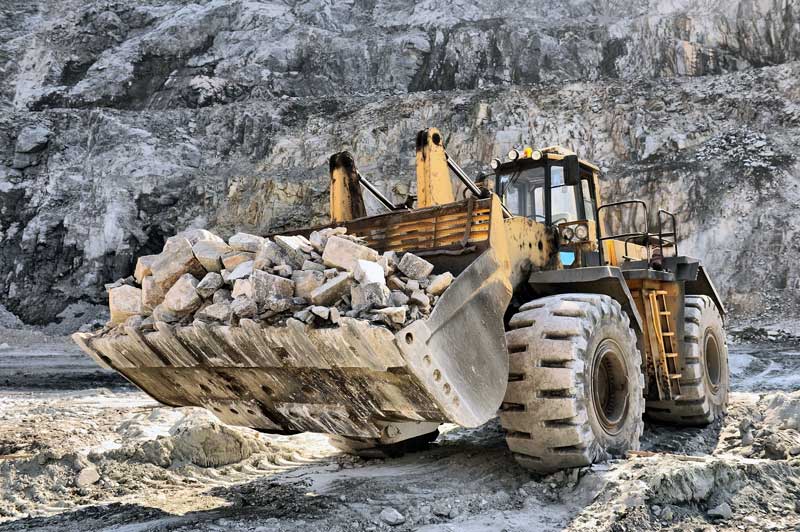
The European Union Conflict Minerals Regulation adopted in June 2017, will take effect on 1st Jan 2021, starting with importers, smelters, and refiners of tungsten, tin, tantalum and gold (3TG). It requires the EU companies to ensure they import the minerals and metals from responsible and conflict-free sources only. EU regulation aims at Ensuring EU 3TG importers to meet international responsible sourcing standards, created by Organisation for Economic Co-operation and Development (OECD). Ensuring all the 3TG global/EU smelters & refiners to source the minerals/metals responsibly. Stopping the illegal exploitation of minerals Bringing an end to exploitation and abuse of local communities and mine workers. EU introduces a concept called “Conflict-Affected and High-Risk Areas”. It’s quite different from US conflict mineral reporting. US conflict mineral reporting, which we currently have, is focused exclusively on the Democratic Republic of Congo (DRC) and surrounding areas, but the EU regulation is global in scope, means, not only Central Africa, it could be West Africa (conflict financing in Mali) or Myanmar (problem area for tin). Even though the reporting guideline has been released by EU, they have not specified the exact format and content of reporting. In order to perform due diligence sourcing, importers should have a system in place that provides with the following information. Country of mineral origin, from where minerals come in. Quantity imported. Trade names and types of minerals imported. Supplier name and address. If a mineral is sourced from conflict-affected and high-risk areas, importers must provide additional information and documentation on; Mine from where minerals come in. Where minerals are consolidated, traded and processed. The taxes and fees paid. If an EU importer has not complied with the regulation, then; Member state will order the firm to address the problem within a given deadline and follow up is madeto ensure it does so. Talk to compliance experts at ComplianceXL, to get more insights on the conflict minerals regulation requirements and its effect on your day to day business.
GHS Revision 8 and Major Changes
The UN Economic Commission for Europe has published 8th revised edition of GHS . The electronic version is still not released and is expected to release by end of September 2019. The major changes in the new version are New classification criteria for Chemical under pressure & aerosols New Hazard category A new annex on dust explosion hazards Added Precautionary pictogram Revised precautionary statements New provisions for the use of in vitro/ex vivodata and non-test methods to assess skin corrosion and skin irritation New labelling examples for sets or kits Editorial revision of Sections 2 and 3 of Annex 3 Major changes are summarized below: 1. Classification criteria change for aerosols According to table 2.3.1, aerosols are to be classified in one of the three categories and it will be based on: their flammable properties their heat of combustion if applicable, test results from the ignition distance test, the enclosed space ignition test and the aerosol foam flammability test, performed in accordance with subsections 31.4, 31.5 and 31.6 of the United Nations Recommendations on the Transport of Dangerous Goods, Manual of Tests and Criteria Listed below are the new aerosol classification criteria Category 1: Any aerosol that contains ≥ 85% flammable components (by mass) and has a heat of combustion of ≥ 30 kJ/g or Any aerosol that dispenses a spray that, in the ignition distance test, has an ignition distance of ≥ 75cm or Any aerosol that dispenses a foam that, in the foam flammability test, has: a heat of combustion of ≥ 20cm and a flame duration of ≥ 2 seconds a flame height of ≥ 4cm and a flame duration of ≥ 7 seconds Category 2: Any aerosol that dispenses a foam that, based on the results of the aerosol foam flammability test, does not meet the criteria for Category 1, and which has a flame height of ≥ 4cm and a flame duration of ≥ 2 seconds or Any aerosol that dispenses a spray that, based on the results of the ignition distance test, does not meet the criteria for Category 1 and which has: a heat of combustion of ≥ 20 kJ/g a heat combustion of < 20 kJ/g and an ignition distance of ≥ 15 cm 2. a heat of combustion of < 20 kJ/g and an ignition distance of < 15cm along with either, in the enclosed space ignition test: a time equivalent of ≤ 300 s/m3 a deflagration density of ≤ 300 g/m3 Category 3: Any aerosol that contains ≤ 1% flammable components (by mass) and that has a heat of combustion of < 20 kJ/g or Any aerosol that contains > 1% (by mass) flammable components or which has a heat of combustion of ≥ 20 kJ/g but which, based on the results of the ignition distance test, the enclosed space ignition test or the aerosol foam flammability test, does not meet the criteria for Category 1 or Category 2. 3. New Hazard category: Chemical under pressure Chemicals under pressure are liquids or solid substances/mixtures, pressurized with a gas at a pressure of 200kPa (gauge) or more at 20 o C in a pressure receptacle other than aerosol dispensers and which are not classified as gases under pressure. Below listed are the classification criteria for chemicals under pressure. Category 1: Any chemical under pressure that contains > 85% flammable components(by mass) and has a heat of combustion of > 20 kJ/g. Category 2: Any chemical under pressure that; 4. contains >1% flammable components (by mass) and has a heat of combustion <20kJ/g or that; 5. contains <85% flammable component (by mass) and has a heat of combustion of <20kJ/g. Hazard statements and pictograms for chemicals under pressure are listed as below. Hazard category Symbol Signal word Hazard statement Symbol 1 Flame & gas cylinder Danger Extremely flammable chemical under pressure. May explode if heated. 2 Flame & gas cylinder Warning Flammable chemical under pressure. May explode if heated. 3 Gas cylinder Warning Chemical under pressure. May explode if heated. 6. New Precautionary Pictograms for “Keep out of Reach of Children” The following pictograms from AISE and JSDA to convey precautionary statement “Keep out of reach of children”. 7. New Labeling Example for Sets or Kits A new example for labelling sets or kit is provided in example 10 appended to Annex7.Small removable inner containers are present in a kit/set. Inner container label The following minimum information mustbe included on the label of each hazardous substance or mixture. Product identifier, and an identifier for each substance or mixture matching the identifier used on the outer packaging label and SDS for that substance or mixture, eg “Reagent 1” and “Reagent 2”. Pictogram(s). Signal word. The statement “Read full label”. Supplier identification (ie name and telephone number). Outer packaging label In addition to the kit identifier, all the required GHS label elements must appear on the outer packaging for each hazard mixture/substance. 8. Dust explosion hazard -A new Annex Annex 11 – Guidance on Other Hazards Not Resulting inClassification, will provide guidance on the identification of dust explosion hazard and need for assessment of risk, prevention, and hazard communication. 9. Minor changes – with regards to precautionary statements for skin irritation and serious eye damage Skin corrosion/irritation- classification to be mentioned as category 1,if the available data is limited & subcategories 1A, 1B or 1C cannot be assigned or as per the competent authority requirement (3.2.2.1.1.2). Serious eye damage/eye irritation-classification category to be mentioned as 2, where the available data is not enough for further categorization, or where the competent authority does not require categorization into 2A or 2B (3.3.2.1.2.1).