
Exploring the Amplified Environmental Threat of PFAS and Microplastics
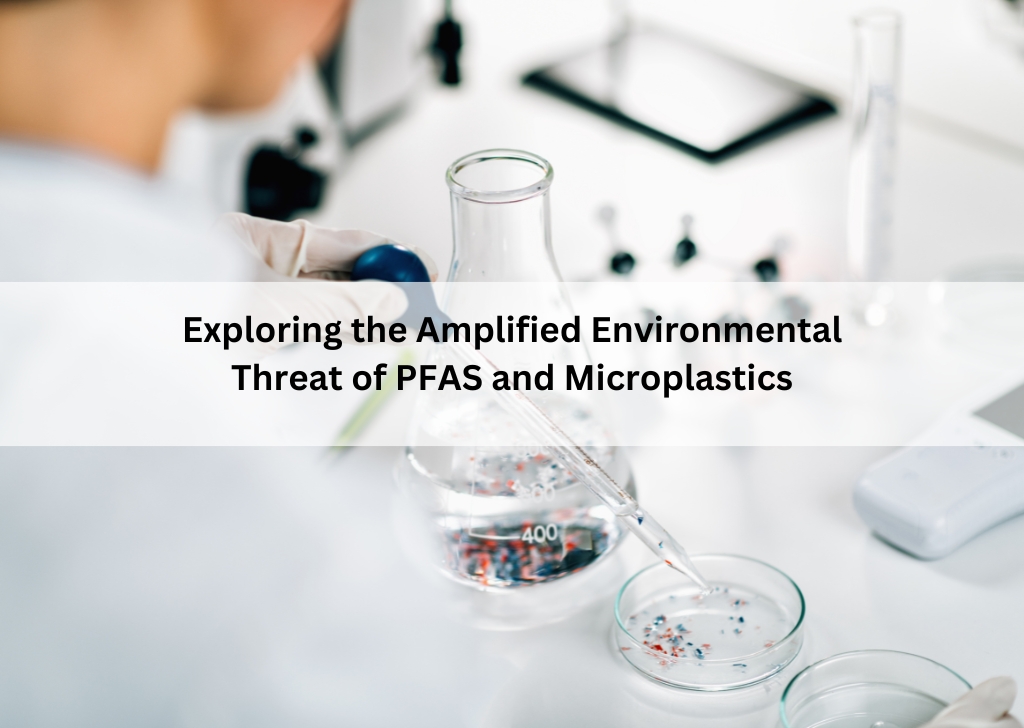
Recently, the world has been paying attention to two specific groups of environmental contaminants—PFAS (Per- and Polyfluoroalkyl Substances) and microplastics. Both are known for their detrimental effects on the environment, their global distribution, and their potential for bioaccumulation or biomagnification. However, new findings suggest a worrying synergy: when these contaminants come into contact, the effects may worsen, adding an additional dimension of threats to the environment and human health. PFAS and microplastics, known as “forever chemicals,” persist in the environment, accumulating and posing risks to wildlife and humans. They can travel long distances through water systems, reaching even the Arctic. PFAS are synthetic chemicals found in a wide variety of industries and applications, including non-stick cookware and fire extinguishing foam. Often referred to as “forever chemicals,” PFAS are not biodegradable in the environment and accumulate in living organisms over time. Microplastics are tiny plastic particles resulting from the breakdown of larger plastic items or directly manufactured for use in products like cosmetics. These particles infiltrate virtually every part of the planet, from the deepest oceans to human bloodstreams, and are known to cause physical and chemical harm to organisms that ingest them. The Synergistic Threat When PFAS and microplastics occur together, the risks are multiplied. Here’s why: Solutions: Managing the risks of this dual contamination requires an immediate response on several fronts: The growing threat of PFAS and microplastics requires urgent action. ComplianceXL plays a crucial role in helping businesses navigate the complex regulations around harmful substances like PFAS, ensuring compliance with standards such as REACH, RoHS, and TSCA. By leveraging ComplianceXL’ s expertise, organizations can reduce environmental risks, adopt sustainable practices, and protect both ecosystems and human health, all while maintaining regulatory compliance. FAQs: 1.What are microplastics? Microplastics are tiny plastic particles. Some are designed to be small, often used in the beauty industry. 2.How do microplastics and PFAS affect the environment? Microplastics absorb PFAS substances and carry them over long distances. When aquatic organisms consume these tiny plastics or microplastics with PFAS, it acts as poison and harms them.