
EU Deforestation Regulation (EUDR): Products Covered and Compliance Essentials
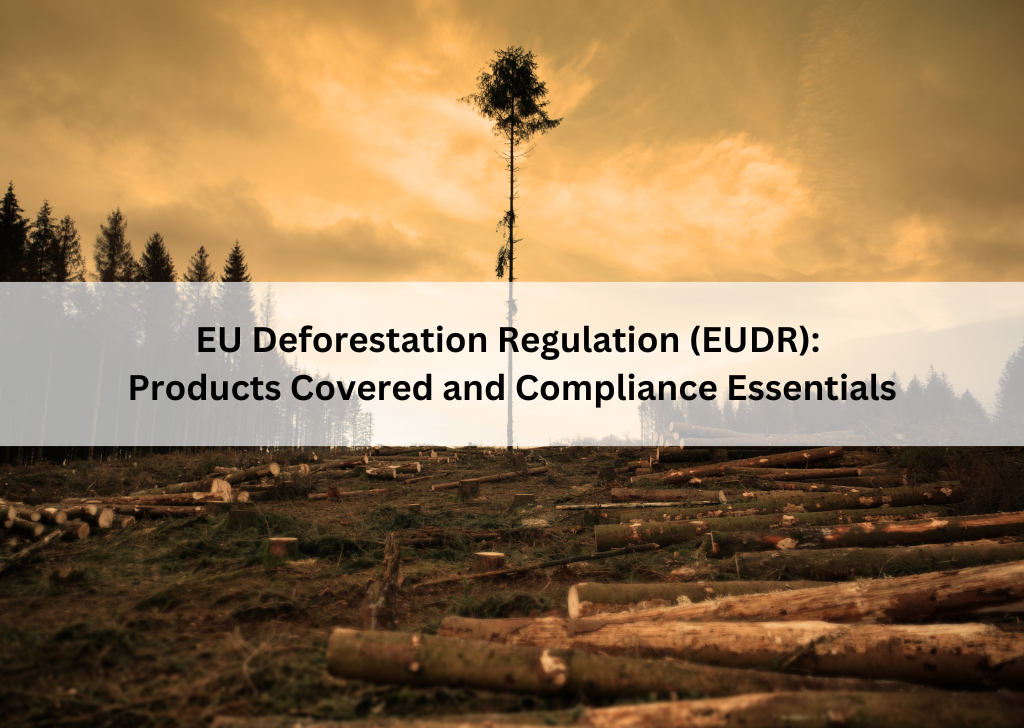
The EU Deforestation Regulation (EUDR) is a significant law introduced by the European Union to reduce global deforestation by closely monitoring how products are produced and traded. Its key objectives are to stop products linked to deforestation from being sold in the EU, ensure companies trace the origin of their products and conduct strict due diligence, and improve transparency around environmental and social impacts in global supply chains. The regulation was initially scheduled to take effect on December 30, 2024, but has now been postponed by one year. It will be enforced for large companies starting December 30, 2025, while small and medium-sized enterprises (SMEs) will be required to comply beginning June 30, 2026. This phased approach gives businesses additional time to prepare for compliance and strengthen their supply chain due diligence processes. EUDR contributes to global environmental protection by holding companies accountable for their sourcing practices. By ensuring that products entering the EU market are not linked to deforestation or forest degradation, the regulation sets a global benchmark for responsible trade. One of its major environmental benefits is reducing greenhouse gas emissions by cutting carbon released from deforestation-related activities, with an estimated reduction of at least 32 million metric tonnes per year. Additionally, EUDR helps preserve biodiversity and safeguards forest ecosystems, while also promoting sustainable agricultural practices by addressing deforestation caused by the production of high-impact commodities such as cattle, soy, palm oil, coffee, cocoa, rubber, and wood. To ensure compliance, the regulation requires companies to conduct thorough checks, including verifying geolocation data of sourced goods and confirming that these products meet legal production standards. While EUDR is an EU regulation, its influence is global, as businesses in exporting countries like India must also comply if they wish to access the EU market. This makes EUDR not just a European requirement but a worldwide trade standard that impacts supply chains across continents. The regulation applies to certain raw materials and products closely linked to deforestation and forest degradation, as listed in Annex I of the law. These products are classified using Combined Nomenclature (CN) codes, which are essential for determining trade compliance. Covered products include everyday goods such as wooden furniture and flooring, cocoa and chocolate products, coffee beans and ground coffee, leather goods including footwear and bags, rubber-based products such as tires and gloves, soy derivatives including animal feed and cooking oils, and palm oil, widely used in cosmetics and biofuels. However, some processed or multi-ingredient products may be excluded if their primary classification under CN codes does not fall within the regulated categories, even if they contain one of the listed raw materials. For this reason, it is crucial for businesses to carefully review the CN codes of their products to determine whether EUDR applies, ensuring compliance and avoiding trade disruptions with the EU. ComplianceXL provides specialized EUDR consulting services, helping companies navigate these complex regulatory requirements. Our services include managing supplier certificates and declarations on a regular basis as part of a robust compliance data management strategy, ensuring businesses remain fully prepared for EU regulatory checks. FAQs: 1. Who needs to comply with EUDR? Operators, Traders, and SMEs are required to comply with the regulation. 2. Does it apply outside of the EU? Yes, producers in countries like India must comply if their products are exported to the EU.
Exploring the Impact of EU Battery Regulations on Sustainability

For a long time, the European Union (EU) has been proactive in implementing policies and laws concerning environmental sustainability. The latest and perhaps most significant step in this direction is the introduction of the new EU Battery Regulations. These regulations aim to promote sustainability, mitigate potential risks, and ensure a circular economy for batteries within the European context. The transition to a greener economy will rely on batteries more than ever, given the increasing number of electric vehicles (EVs) and renewable energy storage systems. However, battery production and disposal have significant environmental impacts, including the depletion of natural resources, carbon emissions, and e-waste. The new EU regulations are designed to address these challenges by enforcing strict environmental sustainability and recycling standards. Key Highlights of the EU Battery Regulations These regulations take a comprehensive approach to managing different stages of a battery’s life cycle, from production to recycling. Some key highlights include: 1. Sustainability and Carbon Footprint Reduction Manufacturers must report the carbon emissions associated with battery production. Soon, the EU will introduce mandatory benchmarks for carbon footprints. 2. Supply Chain Due Diligence Companies must conduct due diligence when sourcing lithium, nickel, and cobalt to prevent human rights abuses and environmental damage. 3. Battery Performance and Durability Standards Batteries used in EVs and other industrial applications must meet minimum performance and durability standards set by the regulations. 4. Recyclability and Circular Economy Used batteries must undergo material recovery processes, ensuring that critical materials such as lithium, nickel, and cobalt are extracted and reused in new production cycles. 5. Consumer Transparency and Labeling Batteries must be clearly labeled with information on their composition, durability, and carbon footprint to help consumers make informed choices. 6. End-of-Life Management and Waste Collection The regulations establish improved systems for collecting and recycling batteries at the end of their life cycle. Recycling targets will increase over time, and manufacturers will be responsible for managing battery waste. These new regulations will have far-reaching implications for the automotive, electronics, and renewable energy sectors. Producers will need to invest in sustainable sourcing, efficient manufacturing processes, and advanced recycling technologies. Consumers, in turn, will benefit from safer, more durable, and environmentally friendly batteries. The EU Battery Regulations mark a significant step toward a more sustainable future by setting higher environmental and ethical standards for battery production and disposal. ComplianceXL offers companies the expertise needed to navigate these complex regulatory changes. With our compliance management support, we ensure a smooth transition to the new requirements, helping businesses minimize risks while maintaining operational efficiency. Our services align with corporate sustainability goals, contributing to a greener and more responsible battery industry. FAQs: 1. What is the EU Battery Regulation in 2027? Starting in 2027, the EU will require batteries to display information such as the manufacturer’s identification, battery type, date of manufacturing, details on hazardous substances, and other data facilitating battery reuse or recycling. 2. What are the objectives of the EU Battery Regulation? The regulation aims to ensure that future batteries have a low carbon footprint, contain limited hazardous substances, require fewer raw materials from non-EU nations, and achieve higher levels of recovery, reuse, and recycling within the EU.