
Are you aware of the ECHA’s new proposal to ban PFASs in firefighting in Europe?
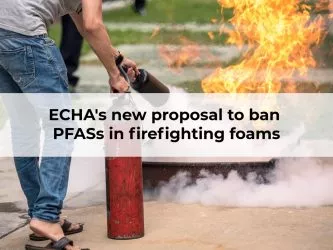
PFAS (per- and polyfluoroalkyl substances) are synthetic chemicals with a wide range of applications in a variety of industries. They are based on the carbon-fluorine bond chemicals and are considered to be the strongest bonds. The stable properties of these materials make them useful for many applications, including food processing, electronics, aerospace, and medical devices. A new trend is replacing long chain bonds with small chain bonds because they are more resistant to degradation, thus reducing human health and environmental impact. Chemicals such as PFAS have the potential to harm humans and the environment through direct or indirect releases through food (example: fish from PFAS contaminated waters), skin contact (use of cosmetics containing these harmful substances), and also through air pollution. According to studies, approximately 18,000 tons of firefighting foam are expected to be sold in the EU each year. Approximately 470 tons of PFAS are contained in these 18,000 tons. In the absence of proper treatment, soil and water might be contaminated. In order to prevent contamination of water and soil and human health risks, ECHA has drafted a proposal for a ban on all PFASs in firefighting foams across the EU. Next steps as per ECHA: A committee of ECHA members will analyze the proposal’s risk assessment. Analyze the socio-economic impact of the proposed ban and the various options for limiting it. After the assessment, what should you do?: A final assessment will be completed by the ECHA committee in 2023. Defining transition periods and timelines for industry to choose suitable alternatives. For non-alternative options, guidelines such as limiting PFAS releases to the environment should be followed. Describe how disposal should be considered after use. In January 2023, five EU countries will submit proposals for Ban: Denmark, Sweden, Norway, Netherlands, and Germany. As a result of PFAS restrictions on firefighting foams, those PFASs are also restricted in broader applications and uses. Combined with automated platform technology, ComplianceXL reduces your workload and gives you hours back in your day by giving you back time on your hands. It is essential to maintain agility when navigating issues like the PFAS restrictions. Get in touch with ComplianceXL for more information about how PFAS may affect your business.
All you need to know about the use of PFAS in the EU Region
Per- and polyfluoroalkyl substances (PFAS) are categories of synthetic chemicals with varied applications in different industries. These are basically carbon-fluorine bond chemicals and considered to be the strongest bonds. They are used in applications such as food processing, electronics, aviation, and medical devices due to their stable properties, such as being heat stable and repellent to water and oil. The new trend is to replace long chain bonds with small chain bonds to reduce impact on human health and the environment since they are resistant to degradation. The impact on human health and the environment can be from direct or indirect release of these chemicals through food (example: fish from PFAS contaminated waters), skin contact (use of cosmetics containing these harmful substances) and also through air contamination. The impact of PFAS on Human health Toxic for reproduction causing damage to foetus. Carcinogenic Endocrine disrupters The impact of PFAS on Environment Air-water contamination due to the presence of carbon and fluorine bonds. Due to their resistance to degradation, they accumulate in the environment, contaminating ground water and air and causing toxic effects. PFAS regulatory obligation The use of PFOS (perfluorooctane sulfonic acid) and PFOA (perfluorooctanoic acid) is already restricted under the Stockholm convention as well as under EU POP (persistent organic pollutants). Furthermore, perfluorohexane sulfonic acid (PFHxS) is being considered for global restrictions and elimination. There are a number of PFAS compounds that are included in REACH SVHCs. Essentially, they affect the environment through drinking water and food contacts through meat products due to their persistence, mobility, and toxicity. For more information about PFASs and the implications they have on your products, please contact one of our compliance experts.