
Breaking Down California SB 54 and the EPR Mandate
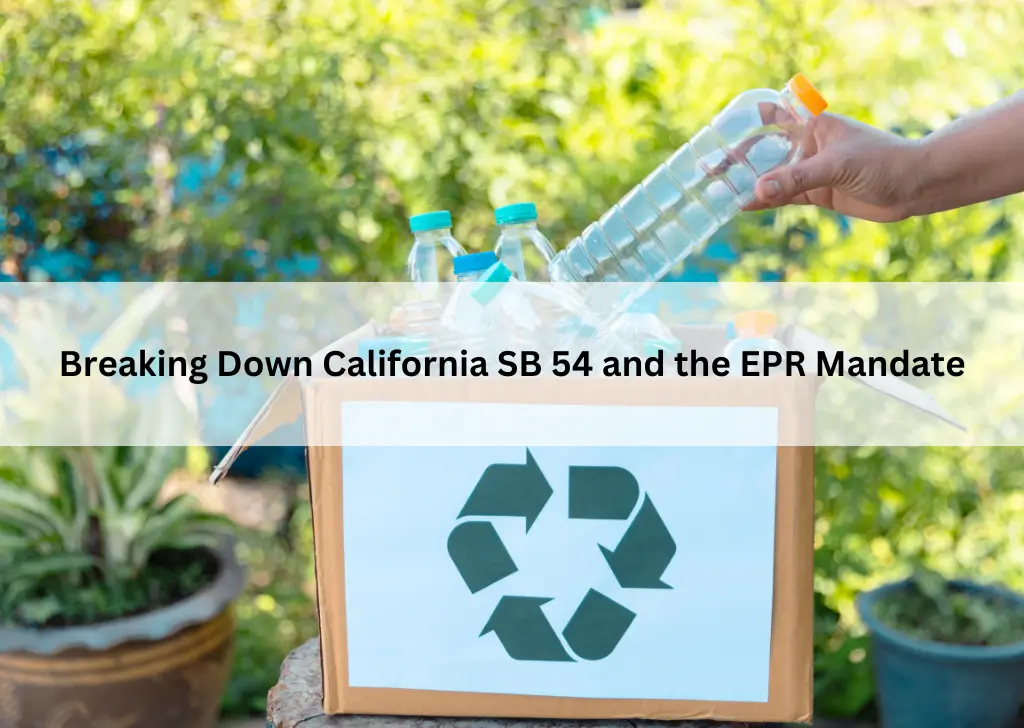
California’s Extended Producer Responsibility (EPR) Bill, known as SB 54, is a landmark law aimed at reducing plastic pollution and improving recycling infrastructure. The bill requires producers to take responsibility for the end-of-life management of their packaging and single-use plastic products. California Senate Bill 54 (SB 54) also known as the Plastic Pollution Prevention and Packaging Producer Responsibility Act, sets up a system called Extended Producer Responsibility (EPR), which means that companies making packaging and plastic food containers are now responsible for reducing waste, making products easier to recycle or compost, and helping create a circular economy. Under California Senate Bill 54 (SB 54), companies that make packaging and plastic food containers are responsible for their products from start to finish that is from design, production, use, till disposal. They must use materials that can be recycled or composted, use less single-use plastic, and help pay for systems that manage waste properly. The law also requires setting up a Producer Responsibility Organization (PRO) to make sure companies follow the rules. It sets big goals to cut waste and improve recycling by the year 2032. The goal of Extended Producer Responsibility (EPR) plan is to create a strong, producer-led system to reduce plastic pollution and packaging waste in California. It follows the rules set by Senate Bill 54 and focuses on the plastic packaging waste reduction by 25% by 2032, making packaging recyclable or compostable and to reach a 65% recycling rate for covered materials by 2032. Overall, SB 54 moves California toward a circular economy, where producers are responsible for their products from start to finish, setting an example for the rest of the country in managing waste more sustainably. ComplianceXL provides California Senate Bill 54 (SB 54) compliance consulting services and render EU’s new regulations collections to companies. We also help our customers to maintain their suppliers’ certificates and declarations on a regular basis to make sure they are up to date as part of their compliance data management strategy. FAQs: 1. What is the deadline for PRO registration and submission? The deadline for Producer Responsibility Organization (PRO) registration and initial data submissions has been changed from July 1, 2025, to within 30 days after the rules become effective 2. What is the penalty for producers who fail to meet the SB 54 requirements? Companies that do not comply with SB 54’s plastic reduction and recycling mandates may face civil penalties of up to $50,000 per day
BPS in California Prop 65: Warning Labels & Compliance Guide
California’s Proposition 65 takes a proactive step to enhance consumer safety and highlight potential health hazards by adding Bisphenol S (BPS) to its list of regulated substances. This addition reinforces the state’s commitment to managing chemical exposures and protecting public well-being. Throughout this blog, we’ll explore the ramifications of BPS’s inclusion in Proposition 65, its potential effects on health, and practical approaches for businesses to uphold compliance standards and minimize associated risks. Bisphenol S (BPS) and Its Uses: Manufacturers widely use Bisphenol S (BPS) in various consumer goods like plastics, thermal paper, and epoxy resins, even though it’s supposed to be a safer alternative to Bisphenol A (BPA), a known endocrine disruptor with documented health risks. Nonetheless, emerging studies indicate that BPS carries its own set of health risks, primarily due to its potential to interfere with hormone function and reproductive health, prompting a reassessment of its widespread use. Health Risks Associated with BPS: Studies show BPS exposure may be linked to a variety of health problems, including: 1. Endocrine Disruption: Like BPA, BPS has been shown to interfere with hormone function, potentially disrupting the endocrine system and affecting reproductive health. 2. Developmental and Reproductive Effects: Animal studies suggest that BPS exposure may impact fatal development and reproductive outcomes, raising concerns about its potential effects on human health, particularly during critical stages of development. 3. Other Health Impacts: Preliminary research has also suggested possible links between BPS exposure and adverse effects on metabolic health, cardiovascular function, and neurological development, though further studies are needed to confirm these associations. Implications for Proposition 65 Compliance: BPS being added on California’s Proposition 65 list, businesses must take proactive steps to evaluate and mitigate potential exposures, as failure to adhere to the stringent warning requirements of Proposition 65 could lead to legal Consequences and enforcement actions, emphasizing the critical importance of compliance with regulatory mandates. Strategies for Compliance and Risk Mitigation: To ensure compliance with Proposition 65 requirements and mitigate risks associated with BPS exposure, businesses can: 1. Conduct Product Assessments: Evaluate products and materials to determine whether they contain BPS above the established threshold levels. 2. Provide Clear Warnings: If BPS exposures exceed regulatory limits, businesses must provide clear and conspicuous warnings to consumers, employees, and others who may be exposed to their products. 3. Explore Alternatives: Consider alternative materials or formulations that minimize or eliminate the use of BPS in products, where feasible and economically viable. 4. Stay Informed and Engage Experts: Stay abreast of updates to Proposition 65 regulations, consult with legal and regulatory experts, and collaborate with industry peers to share best practices and insights. Consumer Awareness and Education: Beyond meeting regulatory obligations, it’s imperative for businesses to place a premium on raising consumer awareness and educating them about the risks associated with BPS exposure. Open communication about product composition, potential dangers, and precautionary measures equips consumers with the knowledge needed to make informed choices and mitigate their exposure to products containing BPS. The addition of Bisphenol S (BPS) to California’s Proposition 65 regulated substances list underscores the importance of proactive risk management and compliance with regulatory requirements. By understanding the implications of BPS inclusion, businesses can take appropriate measures to assess, mitigate, and communicate potential risks effectively. Through collaboration, innovation, and a commitment to consumer safety, companies can navigate the complexities of Proposition 65 compliance while safeguarding public health and maintaining consumer trust. FAQ’s: 1. What is Proposition 65, and why was Bisphenol S (BPS) added to its regulated substances list? Proposition 65, also known as the Safe Drinking Water and Toxic Enforcement Act, requires businesses to provide warnings about significant exposures to chemicals known to cause cancer, birth defects, or other reproductive harm. BPS was added to the list due to its potential health risks. 2. How is Bisphenol S (BPS) commonly used in consumer products? BPS is frequently used in the production of plastics, thermal paper, epoxy resins, and other consumer goods as a substitute for Bisphenol A (BPA).
California Prohibits use of PFAS in Juvenile Products
On October 5, 2021 Governor Gavin Newsom signed 9 laws to reduce plastic waste and the use of PFAS, or perfluoroalkyl and polyfluoroalkyl substances, in certain consumer products. PFAS are prohibited from being used in products intended for infants and children, such as cribs and playpens, beginning July 1, 2023. Toys or childcare articles containing di- (2-ethylhexyl) phthalate, dibutyl phthalate, or benzyl butyl phthalate, in concentrations exceeding 0.1% are prohibited under the existing law. After the passage of this bill, no one, including a manufacturer, will be allowed to sell or distribute any juvenile product in this state that contains regulated perfluoroalkyls and polyfluoroalkyls substances (PFAS), defined by the bill. If a manufacturer replaces PFAS chemicals in a juvenile product, the bill requires them to use the least toxic alternative. The term “regulated perfluoroalkyl and polyfluoroalkyl substances” is used to describe either of the following: The PFASs that a manufacturer has intentionally added to a product and which have a functional or technical effect on the product, including, but not limited to, PFASs that are intentionally broken down by an added chemical that have similar functional effects. In a product component or product, the amount of PFAS is greater than or equal to 100 parts per million in total organic fluorine. The term “juvenile products” encompass all products designed for infants and children younger than 12 years of age, including but not limited to crib mattresses for infants, bedside sleepers for adults, chair pads for highchairs, or infant bouncers. Juvenile products do not include the following: Computer, audio, and video equipment for children, calculators, wireless phones, game consoles, handheld devices that have a video screen, or any associated peripheral, such as a mouse, keyboard, power supply unit, or power cord. Any medical device. Any internal component that would not come into direct contact with a child’s skin or mouth during usage. A mattress for adults.