
ComplianceXL Secures a contract with a leading US manufacturer to support Conflict Minerals Compliance management
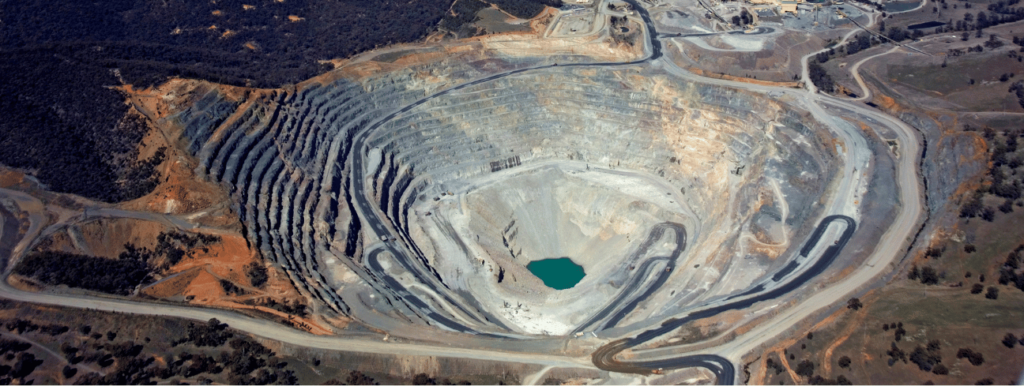
ComplianceXL has signed a contract with a US-based manufacturer of engineered products for industrial, commercial, and consumer markets worldwide. Under the multi-year blanket agreement, ComplianceXL will provide CMRT support services for their entire supply chain. An engineering leader serving a variety of end markets around the world, including industrial, commercial, and consumer markets, the client manufactures engineered products. Due to its global sales footprint, the client must ensure compliance with all major regulatory demands. Therefore, the client must maintain high standards of quality and safety. This system is regularly monitored and updated to ensure compliance with the latest regulations. The Conflict Minerals program by ComplianceXL will include supplier engagement strategy, CMRT collection, and validation, generating roll-up reports, a software platform to store all CoCs, and report submission. Therefore, the client will be able to manage complex products, markets, and supply chain networks while reducing CMRT reporting costs and time to market. Highlights of the engagement: According to CK Bharathan, Head of Compliance Solutions at ComplianceXL, this engagement will allow the client to manage compliance documentation effectively. As a result of this partnering, the client can streamline regulatory compliance management, ensuring seamless compliance with all applicable regulations.In addition, this engagement will provide them with the tools to monitor and enforce compliance requirements within the organization.
All you need to know about Conflict Minerals
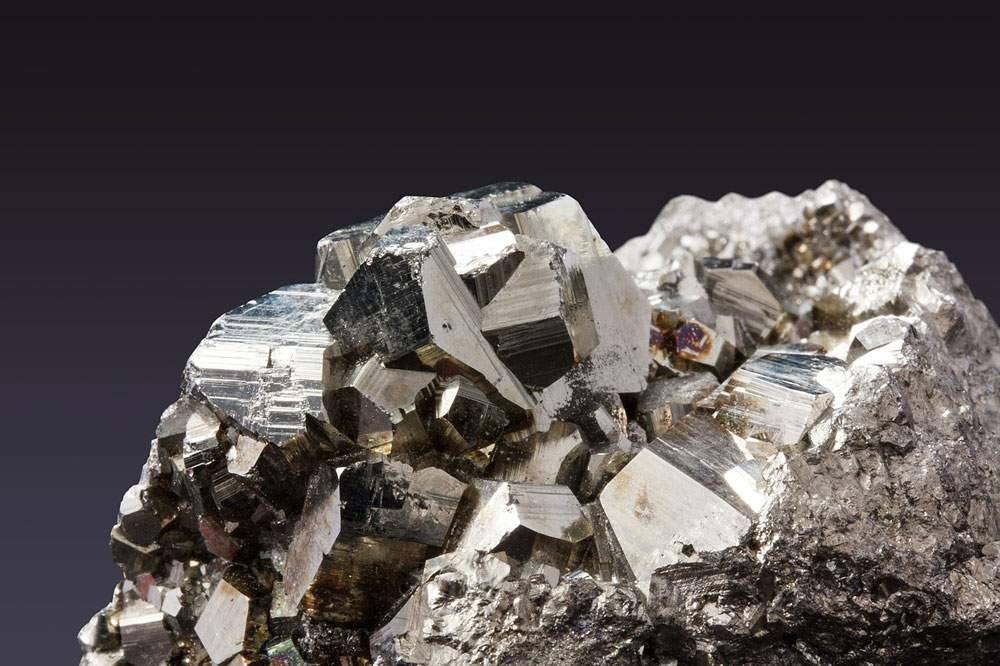
We regularly use various products most possibly containing so-called conflict minerals—rare natural resources such as tantalum, tin, tungsten and gold (3TG), the mining and trade of which results in financial conflicts and human abuse in the Democratic Republic of Congo (DRC) and the adjoining countries. What is covered in this blog to help manufacturers and suppliers? The challenges in conflict minerals reporting program. Why conflict Minerals training is important for your business and your suppliers. How important it is to file under SEC/ to follow/ comply with CM regulation. What does the Dodd-Frank Wall Street Reform Act do? Dodd-Frank 1502 was the first Financial Reform Legislation signed by Former President Barack Obama in 2010 to distinguish between conflict and conflict-free mines. The main goal of the rule is to choke off funding for warlords and militants committing atrocities to run the mines using forced labor and abusive actions. As many companies think, the law does not require companies to stop sourcing 3TG from DRC and also does not force to source from conflict-free mines. The law only requires companies to file under SEC to report on the RCOI (mineral sourcing) and due diligence process. It creates transparency among companies which will help to sell or buy products with assured satisfaction to the suppliers and customers. This will enhance a company’s reputation as a good corporate member by avoiding the purchase of raw minerals from conflict mines and also supporting the law against human abuse. The law is still on its path to reduce the trade of armed militants by significantly reducing the price of conflict-free 3TGs than the price of conflict-3TGs. The high cost and lack of demand created a two-tier market with positive approach for conflict-free mines. This reduces the number of conflict mines in DRC regions. Approximately more than 75% companies and suppliers accepted the justice behind the law and started to follow the guidelines provided by SEC. Supplier’s interest on conducting RCOI, due diligence process and third-party audits is increasing day by day. These actions will improve the Business strategies, Compliance status, Supply chain management and financial performance of a company in the wide and wild corporate world. How to become conflict-free? A Company needs to form cross-functional teams to efficiently track the source of minerals through supply chain management. It is very important to decide whether to blindly comply with the requirements of the law or to perfectly agree and try to work towards the goal. As we think this is not an easy task to withstand ones Companys’ reputation and goodwill among the Competitors, no matter what, they have to stand against conflict mines and ensure that their tier suppliers also supply conflict-free minerals. It is really good to sign a Compliance agreement with the tier suppliers, distributors, smelters or refiners to prohibit the use of conflict minerals. Once the strategy is set, it is the management’s responsibility to accomplish the task efficiently. Do you have a question that whether your company is subject to SEC rule? According to the legislation, the law applies only to publicly traded companies of SEC jurisdiction in U.S. However, it is necessary to comply with the law even if your company does not fall under SEC rule, as your suppliers or distributors may comply with the law. Similarly, your tier suppliers down the globe may require companies including private sectors to remain conflict-free to lead a good business relationship. So, the law gives an international impact, affecting countless number of companies worldwide. Compliance Challenges: The first and foremost challenge would be the cost to track down the entire supply chain. The more complex a product, the more complex would be to trace the origin of the minerals used in the product. Aligning thousands of suppliers on a single chain is a huge and costly challenge. After all that, the process is time consuming and error-prone. Thus, compliance documentation becomes impractical for many companies. Apart from challenges faced by the companies on cost and supplier tracking, Compliance activities play a high priority role in most of the industries. Compliance Strategies: Affected companies are under pressure to take action and develop a strategy to comply with the law. Few steps to lead the compliance path- Determine whether your company complies with the SEC law. Understand the legislation established and how it affects your company. Form efficient team to handle the supply chain activities. Conduct a RCOI process to confirm the origin of the minerals used in the products. The RCOI can be processed through EICC and GeSI’s framework. If your products are sourced from DRC regions, then go for due diligence process and third-party audits. The framework developed by OECD is the only available guidance for due diligence process. Initiate trainings and seminars to make the suppliers understand the importance of the Act. Make sure your requirements are clearly explained. This include the Companies responsibility to build a good compliance chain. Review the data gathered from the entire supply chain and take necessary actions. Request your suppliers to remain conflict-free. Prepare a detailed Conflict minerals policy to share with your tier suppliers. File the Conflict Minerals Report (CMR) annually. Eliminate the contact with conflict suppliers for the next reporting as that will help to grow your business relationship with other suppliers and moreover remember that the competitors are gradually increasing in compliance field. These steps are similar to climbing a mountain. Fortunately, there are numerous data services companies to reduce your company’s burden and support them in Compliance. This will enable your company to face and overcome the challenge of managing, collecting and reporting conflict minerals information with less time and human effort. Finally, the most important target to meet, customer’s requirement and satisfaction, will be accomplished. Our compliance services focus on training, capacity-building and delivering strategy that allows companies to create efficiencies of their supply chain compliance. Talk to our compliance experts to learn more about being compliant to conflict mineral regulation and mitigate supply chain risks.
Get Ready! European regulation on Conflict Minerals is implemented
The European Union Conflict Minerals Regulation adopted in June 2017, will take effect on 1st Jan 2021, starting with importers, smelters, and refiners of tungsten, tin, tantalum and gold (3TG). It requires the EU companies to ensure they import the minerals and metals from responsible and conflict-free sources only. EU regulation aims at Ensuring EU 3TG importers to meet international responsible sourcing standards, created by Organisation for Economic Co-operation and Development (OECD). Ensuring all the 3TG global/EU smelters & refiners to source the minerals/metals responsibly. Stopping the illegal exploitation of minerals Bringing an end to exploitation and abuse of local communities and mine workers. EU introduces a concept called “Conflict-Affected and High-Risk Areas”. It’s quite different from US conflict mineral reporting. US conflict mineral reporting, which we currently have, is focused exclusively on the Democratic Republic of Congo (DRC) and surrounding areas, but the EU regulation is global in scope, means, not only Central Africa, it could be West Africa (conflict financing in Mali) or Myanmar (problem area for tin). Even though the reporting guideline has been released by EU, they have not specified the exact format and content of reporting. In order to perform due diligence sourcing, importers should have a system in place that provides with the following information. Country of mineral origin, from where minerals come in. Quantity imported. Trade names and types of minerals imported. Supplier name and address. If a mineral is sourced from conflict-affected and high-risk areas, importers must provide additional information and documentation on; Mine from where minerals come in. Where minerals are consolidated, traded and processed. The taxes and fees paid. If an EU importer has not complied with the regulation, then; Member state will order the firm to address the problem within a given deadline and follow up is madeto ensure it does so. Talk to compliance experts at ComplianceXL, to get more insights on the conflict minerals regulation requirements and its effect on your day to day business.
Conflict minerals in EU – What it means for you and your business.
It’s a most conversable topic in the environment and material compliance space; In 2010, US Congress passed the Dodd-Frank Act, with rules requiring SEC listed companies to disclose their use of conflict minerals viz., Tantalum, Tin, Tungsten or Gold (3TG). The purpose of the rule was to keep a check on exploitation and trade of conflict minerals by armed groups is helping to finance conflict in the DRC region and is contributing to an emergency humanitarian crisis. Starting January 2021, a new law will apply across the EU – “the Conflict Minerals Regulation” As the world’s biggest trading bloc, the European Union has a responsibility to contribute to fair, transparent and value-based trade. This is a big step in that direction. It aims to help stem the trade in four minerals such as Tantalum, Tin, Tungsten and Gold, which are used in the production of everyday products like mobile phones, cars and jewellery; which sometimes finance armed conflict or are mined using forced labor. The structure of this guidance defines frameworks, policies, measures and supplements to determine due diligence processes for responsible supply chain of minerals from conflict-affected and high-risk areas, consistent with applicable laws and relevant international standards. A Five-Step Framework: EU importers will have to carry out checks on their supply chain by following a five-step framework, as defined in the ‘Organisation for Economic Co-operation and Development (OECD)’ guideline: Inside and outside the EU Indirectly, the regulation affects smelters and refiners of Tantalum, Tin, Tungsten and Gold, both inside and outside the EU. This is because EU importers of minerals and metals will need to make sure they source from responsible smelters and refiners i.e.; the regulation focuses on conflict minerals from all “conflict-affected and high-risk areas” around the world. In this way, the EU regulation is different from the US rule, which focuses on conflict minerals only from the Democratic Republic of the Congo and adjoining countries. For “upstream” companies who import raw materials to smelting and refinery plants in the EU. This covers the vast majority of such metals and minerals imported to Europe. The particular needs of small companies will be catered to so as to avoid subjecting them to overly cumbersome procedures, by exempting recycled minerals, and imports of very small volumes. For “downstream” companies, that use the refined forms of these metals and minerals in components and goods, the Commission will now carry out a number of measures. These include the development of reporting tools and standards to further boost due diligence in the supply chain, as well as setting up a transparency database. Those downstream operators who import refined, metal-stage products into the EU will be covered by the mandatory obligations. Through a review clause, there is also the possibility for the Commission to propose further mandatory obligations for the downstream supply chain if deemed necessary. Third party report In addition to the framework, companies are also required to provide third-party audit reports on smelter and refinery diligence practices. They must identify and assess the risks of adverse human rights impacts in their supply chains. Importers that pursue risk mitigation efforts as they continue to trade with, or even if they temporarily suspend trade with, certain suppliers are required to consult with suppliers, government authorities, civil society organizations, and other third parties on a risk mitigation strategy. How do you ensure compliance? One of the key challenges that companies face today is huge gap in supply chain traceability and related documentation, which is critical to make the compliance assessments and declarations. The Supplier base is today not able to deliver the required compliance data, such as Certificates of Compliance or Material Source information, which is critical for a legitimate compliance program. Enventure is today a leader in the compliance space, providing a host of solutions that enable customers to meet their regulatory compliance obligations. With services ranging from Consulting to Gap Analysis to Training and Data Collection, Enventure is able to provide comprehensive solutions, which are tailored to customer specific needs and priorities. Our unique ability to handle standard off-the-shelf parts, as well as custom parts sets us apart from the competition and makes the parts coverage best in class, since 2003, Enventure has assisted over 600 global corporations in fulfilling their regulatory & environmental compliance requirements within stipulated timelines, and with high levels of cost efficiency. Our customers include OE Manufacturers, Contract Manufacturers, as well as Distributors and Retailers.
The Latest Version of CMRT 5.10 – What’s New?

The CMRT or the Conflict Minerals Reporting Template, standardized reporting template developed by the Responsible Minerals Initiative (RMI) that facilitates the transfer of information regarding 3TG minerals (Tantalum, Tungsten, Tin, Gold), it’s country of origin and smelters and refiners. In order to help companies improve on their compliance and handle effective sourcing from high-risk areas, RMI has introduced this template for a structured compliance reporting. The CMRT is being revised on a regular basis depending on the supplier requirements and Smelter/Refiner (SOR) analysis, the previous CMRT 5.0 version update was released on May 12, 2017 and now the latest version CMRT 5.10 is released on December 1, 2017. List of changes in the updated version: Corrections to all bugs and errors Update to ISO country, state and province lists Enhancements which do not conflict with IPC-1755, Updates to the Smelter Reference List and Standard Smelter List Change from .xls to .xlsx format Along with this, there have been updates to the smelter list. The next version of the CMRT is expected to be released during April 2018, to make the compliance reporting processes easy and convenient. Click here to Download the CMRT from Responsible Minerals Initiative (RMI) website.
Conflict Minerals Compliance: FREQUENTLY ASKED QUESTIONS

While handling environmental compliances, suppliers and manufacturers from various industries face multiple challenges. After having provided successful compliance services to all our Clients across geographies, we decided to compile our set of frequently asked questions about Conflict Minerals Compliance. Below is the set for your reference: 1. What if a company decides not to comply with Section 1502 or SEC filing? If a company does not comply with the laws of the SEC, it will not be able to raise new capital under the Exchange Act. 2. Is SEC filing applicable for private companies? Private companies are not required to file annual reports under the SEC but if their customers are publicly traded on the US stock exchange and are liable to file a conflict minerals report, then the company should also report under SEC on the Origin and mining procedures of the minerals. 3. Which framework can be suggested for due diligence process? The due diligence process should be carried out by a nationally or internationally recognized framework. Currently, the only recognized framework is the OECD (Organization for Economic Cooperation & Development) which performs Due Diligence Guidance for a Responsible Supply Chain of Minerals from Conflict-Affected and High-Risk Areas. 4. When will an issuer NOT be considered as “contract to manufacture”? In the following cases the issuer cannot be considered as “contract to manufacture” If the issuer is involved in Specifying or negotiating contractual terms with the manufacturer Affixing brand, logo, marks or label to a generic product Services, maintenance or repair activity If the issuer is not directly or indirectly involved in the manufacturing process 5. What do you mean by “DRC conflict-free”? “DRC conflict free” means the product manufactured does not contain any of the 4 conflict minerals (Tantalum, Tin, Gold and Tungsten) that have been identified to directly or indirectly benefiting militants in the DRC- Democratic Republic of Congo, countries. 6. When can an issuer describe the products as “DRC conflict undeterminable”? If the issuer is not able to determine that the conflict minerals mined from DRC countries, are benefiting armed groups even after due diligence process then the products are considered to be “DRC conflict undeterminable”. The undeterminable status of the product would be based on the due diligence process (conducted by OECD). 7. Can a company provide Conflict minerals policy stating that “we are conflict free”? No, in most cases, a comprehensive Conflict Minerals Compliance process is required. However, if a company provides full due diligence documentation and supporting data through the Conflict Minerals Reporting Template (CMRT) to verify its products are conflict-free, a policy statement may be accepted. Compliance with due diligence requirements is mandatory and cannot be bypassed. 8. Which CMRT should be used for 2016 filings? We recommend to use the latest CMRT v4.01a which has been released after examining the errors in the prior versions. Moreover, the most updated Standard smelter list is included in CMRT v4.01a.