
Did you know about RAC restriction on the use of Lead in outdoor sports and fishing?
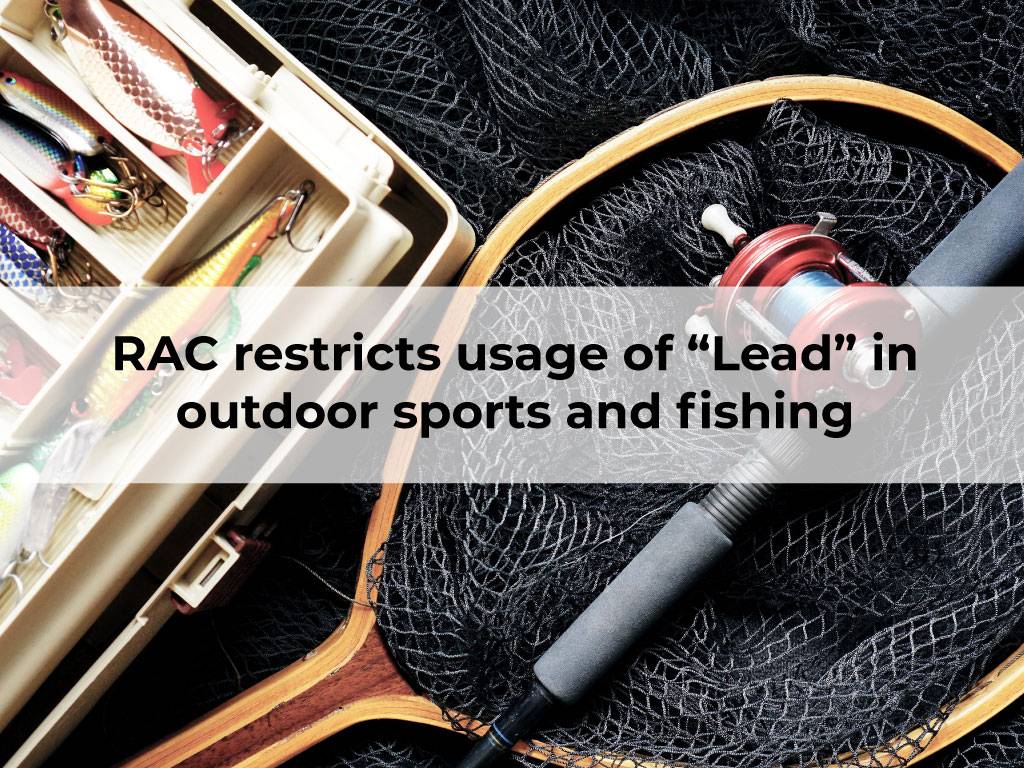
ECHA created a proposal for EU-wide restrictions on the use of lead in ammunition for outside sports shooting and fishing in Feb 2021. They estimated 135 million birds are in danger from ingesting spent lead gunfire, 14 million birds from eating the animals shot with lead ammunition, 7 million from ingesting lead fishing tackle. Effects of reducing usage of lead in outdoor sports and fishing This can stop the poisoning of wildlife, together with several species. This can help to prevent 1.1 million children and pregnant women from the lead emissions. This can help to reduce 72% of lead emissions. The restriction proposal was developed at the request of the EU Commission to aim Zero Pollution for water, air, and soil. ECHA’s Committee for Risk Assessment (RAC) supports restricts the utilization of lead in ammunition for searching, outside sports shooting and in fishing. However, it recommends a shorter transition time to terminate lead gunfire in searching. The Committee for Socio-economic Analysis (SEAC) is anticipated to agree its draft opinion in early Gregorian calendar month before finalizing its opinion in December. RAC has highlighted these points for considering restriction The projected restriction, with minor modifications, is an effective, practical, and monitorable live to handle the risks. Shorter transition amount for victimization lead gunfire for searching. Labelling of ammunition and fishing sinkers containing lead and knowledge to shoppers at purpose of sale. Derogation for lead gunfire in sports shooting. During this Proposal, RAC members did scientific analysis on wildlife, on the atmosphere. They have also taken the data from the EU Food Safety Authority (EFSA). At initial the information showed some uncertainties but they thought the study was good enough to demonstrate the risks causing to Children and Pregnant women. The Next plans on RAC restriction: SEAC is anticipated to agree its draft opinion in early Gregorian calendar month. A 60-day consultation on SEAC’s draft opinion can begin presently when. The opinions of each committee are expected to be prepared by the top of 2022 and they’re going to be sent to the EU Commission at the beginning of 2023 for review. The selections on REACH restrictions are taken by the EU Commission beside the EU countries and scrutinised by the Council and the European Parliament. Interested in learning more about the RAC restriction lead in outdoor shooting and fishing? Talk to one of our compliance specialists today!
Hazard Classification of Glyphosate by EFSA and ECHA
A record number of comments were received during EFSA and ECHA’s consultations on the draft assessments of glyphosate, indicating that it is a highly relevant substance. The level of public participation in the evaluation of active substances in the EU highlights the importance of transparency. As of 10 May 2022, EFSA added significant new data to a dossier containing far more scientific evidence than are normally available for such assessments with the input received from the consultations and responses received from the applicant (the Group on the Renewal of Glyphosate) in response to the agency’s request for additional information. The Assessment Group on Glyphosate (AGG), composed of four EU Member States – France, Hungary, the Netherlands and Sweden – that is currently updating its initial draft renewal assessment report (dRAR), will thoroughly review the additional information. To accommodate this context, EFSA and ECHA revised the timeline for the remaining steps in the process of re-evaluation. ECHA’s classification As part of its plenary meeting on 30-31 May, the ECHA’s Committee for Risk Assessment (RAC) is scheduled to discuss the hazards of glyphosate. As part of its review, the Committee will examine carcinogenicity, genotoxicity, reproductive and developmental toxicity, as well as environmental classification. A draft of RAC’s opinion will be made available to EFSA and published on ECHA’s website within 8-10 weeks (i.e., mid-July to the end of August 2022). As part of the peer review of the dRAR, the EFSA will take into account the RAC opinion. EFSA’s peer review The EFSA received 368 responses to its public consultation, many of which included multiple comments. Additionally, EFSA received approximately 2400 comments from Member State experts and the Glyphosate Renewal Group (GRG). The GRG and the AGG will need to review approximately 3000 pages of these contributions, which will serve as the basis for developing an updated dRAR. As per AGG’s notification to EFSA, the updated dRAR is scheduled for submission on 30 September 2022. The Pesticides Peer Review meetings will therefore be held between November and December 2022 at EFSA, and the conclusions will be finalized by July 2023. EFSA will evaluate all possible risks associated with glyphosate exposure, including those to humans, animals, and the environment. In addition to considering all comments, this updated timeline reflects our obligation to conduct a thorough risk assessment. Timeline: Glyphosate re-assessments December 2019: The Glyphosate Renewal Group (GRG) submits a renewal application. June 2020: The Glyphosate Review Group submits a complete renewal dossier, and the Assessment Group on Glyphosate (AGG) begins working on the initial assessments. June 2021: The AGG submits the draft renewal assessment report (dRAR) and the Harmonised Classification and Labelling (CLH) report to EFSA and ECHA, respectively. August 2021: AGG updates dRAR and CLH reports for EFSA and ECHA based on qualitative and administrative checks. September 2021: EFSA and ECHA launch parallel consultations. November 2021: The parallel consultations close. First half of 2022: In addition, AGG takes into account the GRG’s response to each of the comments received during the consultations. EFSA and ECHA review the comments and the information received during the consultations, including the AGG considerations. EFSA requests additional information from GRG to complete the data package and sends agreed action points for AGG to follow up on 21/22 April 2022: The ECHA’s Committee for Risk Assessment (RAC) Working Group discusses the proposal for harmonized classification and labelling (CLH). 30 May – 3 June 2022: ECHA’s RAC will meet, and an opinion will be adopted on glyphosate’s classification. End of September 2022: EFSA will receive an updated dRAR from the GRG following the identification of action points and the evaluation of additional information provided by the GRG. November – December 2022: Experts from EFSA and EU Member States will meet to peer review the updated renewal assessment report (RAR). The AGG shall then review the RAR in light of the expert meeting outcomes and, subsequently, EFSA shall draft the peer review Conclusions in conjunction with follow-up consultations with AGG and Member States experts. July 2023: The European Commission, member states, and the GRG will receive the conclusions of EFSA’s peer review.
ECHA amends Directive (EU) 2022/431 to include three substances under the CMD
On 16 March 2022, the EU Commission published Directive (EU) 2022/431. An announcement is made to amend Directive 2004/37/EC concerning the protection of workers against the risks associated with carcinogens and mutagens at the workplace. The Directive (EU) 2022/431 has been amended for the fourth time. The co-legislators signed the bill on March 9, 2022. ECHA’s Committee for Risk Assessment (RAC) evaluated three substances under the Carcinogens and Mutagens Directive (CMD) as part of a pilot project assessing occupational exposure limits for five substances in 2017-2018. According to the fourth CMD amendment, the limit value for below three key carcinogens will be revised. There is a long-term limit and a short-term limit. Acrylonitrile: As a carcinogen, Acrylonitrile has been classified as Category 1B. Acrylonitrile is also capable of being absorbed through the skin. A short-term limit value of 4 mg/m3 (1,8 ppm) is introduced. In addition, there will be a transitional period of four years after the entry into force of the Directive from which the respective occupational exposure limit (OEL) values will apply. Nickel and its compounds: Compounds containing nickel are classified as carcinogens (category 1A). As a result, a limit value of 0.01 mg/m3 is introduced for the respirable fraction and a limit value of 0.05 mg/m3 for the inhalable fraction. For the inhalable fraction of nickel compounds, there should be a transitional period until 17 January 2025 inclusive, during which a limit value of 0,1 mg/m3 should be applied. Benzene: The carcinogenicity of benzene is classified in category 1A (carcinogenic). The limit value has been revised to 0,2 ppm (0,66 mg/m3). This Directive should therefore be implemented with a transitional period of four years following entry into force. During the transition period, the limit value of 1 ppm (3,25 mg/m3) provided for in Directive (EU) 2019/130 of the European Parliament and the Council should remain in place until 5 April 2024, and a transitional limit value of 0,5 ppm (1,65 mg/m3) should be in place from 5 April 2024 until 5 April 2026. Additionally, it includes requirements for reprotoxic substances and hazardous medicinal products (HMPs). A sufficient and appropriate amount of training is required for health care workers dealing with HMPs. According to the agreed text, the Commission will be requested to establish an indicative list of HMPs, as well as guidelines for their handling, particularly in hospitals, by the end of 2025. Furthermore, the Commission must provide legislative proposals on occupational exposure limit values for 25 substances or groups of substances before the end of 2022. In addition, it must begin the process of lowering the occupational exposure limits for crystalline silica dust. Directive (EU) 2022/431 must be implemented by member states within two years following adoption.
ECHA Postpones Submission Data for Bisphenol a Restriction Report
According to ECHA, the submission of the 4,4′-isopropylidenediphenol (bisphenol A, BPA) (EC 201-245-8,CAS 80-05-7) restriction report by Germany has been postponed until 7 October 2022. European Chemicals Agency (ECHA) is seeking comments on the substance and examples of its uses: N-(Hydroxymethyl)acrylamide (EC 213-103-2, CAS 924-42-5) used as monomer for polymerization.The chemical Bisphenol A (BPA) is used to make polycarbonate plastic. In addition to hard plastic items, such as baby bottles, re-usable water bottles, food containers, pitchers, tableware, and other storage containers, polycarbonate plastic is also used to make soft plastic items. BPA may have adverse effects on the fetus, infant, and child’s brain and prostate gland when exposed to it. Children’s behavior may also be affected by BPA exposure. In addition, additional research indicates that BPA may be related to increased blood pressure, type 2 diabetes, and heart disease. The deadline for comments on BPA restriction is 19 April 2022. Until the outcome of the Annex XV review and any restrictions proposed, ECHA keeps a registry of restriction intentions. A restriction proposal can be prepared by a Member State or by ECHA either on their own initiative or at the request of the Commission. An authorization request can be made for substances on the Authorization List. A Member State must inform ECHA of its intention to develop a restriction dossier as a matter of law. Interested parties can plan and prepare their comments in advance by reviewing the advance notice. Following the progress of a proposal through the restriction process is possible, starting with the notification of the intention, followed by the adoption of the final opinions by the Risk Assessment Committee (RAC), the Socioeconomic Analysis Committee (SEAC), and the adoption by the European Commission of the restriction. As part of the preparation and consultation of the restriction proposal, stakeholders are encouraged to submit any relevant information to the dossier submitters. It is important to receive information to motivate any exemptions to the scope described in the intention during the preparation phase of the dossier. Companies are responsible for making sure they are aware of the composition of the products they sell. Using ComplianceXL’s Managed Compliance Solution, you’ll enhance data collection and streamline reporting for chemical substances using regularly updated restricted substances lists.