
Key Elements of PPAP Process for Automotive Industries
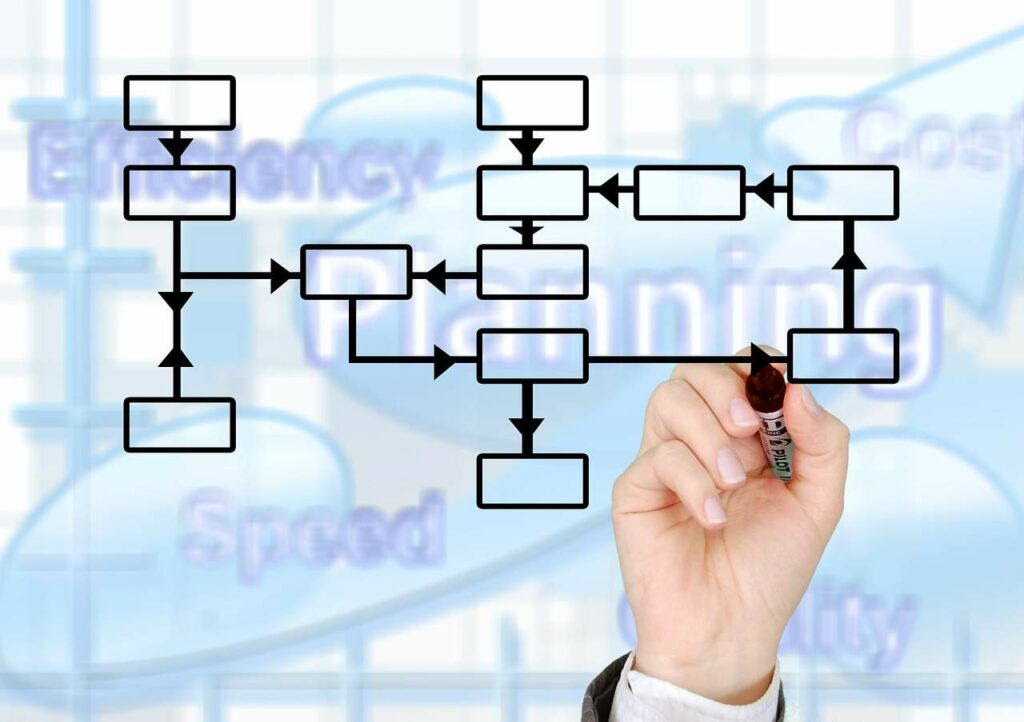
The Production Part Approval Process (PPAP) acts as a proof for the supplier to understand the detailed requirement of the product/part being manufactured or supplied to its customers. The PPAP consists of 18 elements or documents that detail out the production process: Design Documentation: The design records for components and/or details of the saleable product/part. In case the design record is in the electronic format (for example, CAD / CAM math data) the organization shall produce a hard copy (for example, pictorial, GD & T sheets, drawings etc.) to identify the measurements taken. Engineering Change Documentation: It is a document that shows a detailed description of the change. The document records or authorizes the change to a specific design. The reason for the change is also recorded. Typically, this document is called the “Engineering Change Notice”. It may be covered by the customer Purchase Order (PO) or any other engineering authorization. Customer Engineering Approval: The organization shall have evidence of customer engineering approval, as specified by the customer. The customer engineering approval may be required for the product or any associated documentation related to that product. If approval is required, it will be stated on the customer’s drawing or any similar documentation. When required as part of the PPAP, the supplier must provide evidence of approval by the customer engineering department. Design Failure Mode and Effects Analysis: The organization responsible for the product design shall develop a DFMEA in accordance with, and in compliance to, the requirements specified by the customer. A single DFMEA may be applied to a family of similar parts. Design Failure Mode and Effects Analysis (DFMEA) is a cross-functional activity that examines design risks. It explores the possible failure modes, effects on the product/customer, and the probability of failure to occur. These failure modes include: Product malfunctions Reduced performance or product life Safety and regulatory issues. The DFMEA is a document that should be reviewed and updated throughout the product life cycle. There are 11 steps required to complete a DFMEA, Design review – Use the product or service design drawings or documents to identify each component and its relation with other product/service components. Brainstorm upon the potential failure modes. List the potential failure modes. List the potential effects of failure mode. Assign the seniority ranking, basis the consequences of failure (1-10). Assign the occurrences ranking (1-10) Assign detection ranking based on the chance of detection prior to failure (1-10). – Easy detection is assigned a score of -1 or less – Difficult detection is assigned a higher score Calculate the Severity X Occurrence X Detection (SOD) number or the Risk Priority Number (RPN). Develop an action plan to reduce vital RPN (above the set base line). Implement the identified improvements. Calculate the RPN, basis the improvements. Do mistake proofing. Process Flow Diagram It is a visual representation (diagram) of the entire process – from receiving through shipping – including the external processes and services. The main objective or purpose of the Process Flow Diagram is to help people “see” the real process map. It can be used to understand the following characteristics of a process: Systematic process linkage Offline activities (measurement, inspection, handling) Rework, scrap, etc. When to use a Process Flow Diagram? To understand how a process is done Before completing the FMEA. Process Failure Mode and Effects Analysis PFMEA is used to identify and prioritize risk areas and their mitigation plans. A cross-functional team (CFT) should complete the PFMEA. Objective or Purpose: Identifies potential failure modes, causes, and effects. Inputs are drawn from the process flow diagram. Identifies key inputs that affect quality, reliability and safety of the product or process – either positively or negatively. When to use PFMEA: After completion of process flow diagram. Prior to tooling for production. Benefits of PFMEA: Allows users to take a proactive approach to what can go wrong in a process and manage risks better. Promise: You own/operate/require/design or are responsible for equipment essential to a system/process/activity, which may be small or large, simple or complex. It may be related to a plan or something that’s currently in operation. Control Plan The organization has to maintain a control plan as per customer –specific requirements. If the organization reviews commonality, then control plans for families of products are acceptable. Approval of control plans may be required by some customers. The organization shall have a control plan that defines all methods used for process control; it should comply with all customer specific requirements. The control plan for families of parts is acceptable if the new parts have been reviewed for commonality by the organization. In general, there are 3 types of control plans: Prototype Pre-Launch Production The pre-launch and production control plans may be applied to a family of products or specific processes. Measurement System Analysis Studies MSA is a statistical tool used for determining if a measurement system is capable of returning precise measurements (Gage Repeatability & Reproducibility) or not. Objective or purpose: To determine errors in measurement due to the measuring process itself. Quantify the variability added by the measurement system. It is applicable to attribute data and variable data. Conducting MSA reduces the likelihood of passing a bad part or rejecting a good one. It is used on critical inputs and outputs, prior to collecting data for analysis. Dimensional Results: It provides evidence that dimensional verification is complete and the results indicate compliance with specified requirements. Objective or Purpose: To show conformance to the customer’s print (drawings) of dimensions and all other noted requirements. It is used for each unique manufacturing process (for example, cells or production lines, and all moulds, patterns or dies). Records of Material / Performance Tests: Material Tests: The supplier needs to verify and test all parts and products for the chemical, physical, or metallurgical requirements of materials, as mentioned in the drawing or control plan. For products with customer developed material specifications and/or customer approved supplier list, the supplier shall procure materials and/or services from a supplier mentioned on