
All you need to know about Flammable Liquids
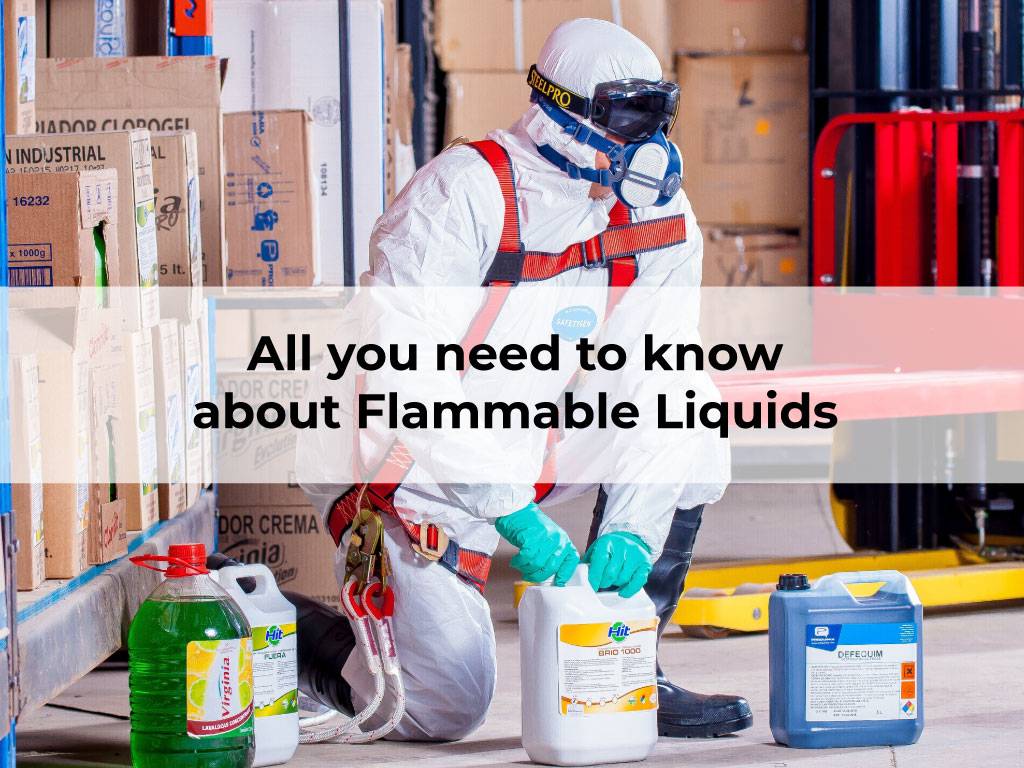
All you need to know about Flammable Liquids Insights on Understanding GHS classification of Hazards in hazard communication. Flammable liquids: A flammable liquid means a liquid having a flash point of not more than 93 °C. Flash point: The flash point is the lowest possible temperature for vapor from a flammable liquid to ignite when triggered by an ignition source. As a result, the main risk of flammable liquids is released vapour. Highly volatile liquids, or those that evaporate quickly under different circumstances, provide the most risk. Classification criteria: The Globally Harmonised System (GHS) is a classification and labeling system that can help you responsibly store and handle your flammable liquids. This system classifies flammable liquids into one of 4 categories – as defined by their flashpoint. Category Criteria 1 Flash point < 23 °C and initial boiling point ≤ 35 °C 2 Flash point < 23 °C and initial boiling point > 35 °C 3 Flash point ≥ 23 °C and ≤ 60 °C 4 Flash point > 60 °C and ≤ 93 °C A flammable liquid is a liquid having a flash point of not more than 60 °C (140 °F), or any material in a liquid phase with a flash point at or above 37.8 °C (100 °F) A combustible liquid is a liquid having a has a flash point above 60.5 °C (141 °F) and below 93 °C (200 °F). Label elements for flammable liquids: Category 1 Category 2 Category 3 Category 4 Symbol Flame Flame Flame No symbol Signal word Danger Danger Warning Warning Hazard statement Extremely flammable liquid and vapour Highly flammable liquid and vapour Flammable liquid and vapour Combustible liquid As part of our thought leadership, we are introducing the “GHS Hazard series” which provides detailing information about Hazard Communication management tips. Follow us to learn more.
MSDS Software Compliance with GHS and REACH
Material safety data sheet is a safety data sheet that is provided to a chemical manufacturer or distributor that has all the information about hazardous chemicals written down on them. It provides health and safety information about products that are classified as hazardous. These sheets help in making risk assessment as required by the Control of Substances Hazardous to Health Regulations (COSHH). GHS is the Global Harmonized System of Classification and Labeling of Chemicals. This was given by the UN where it classifies and defines the hazards of chemical products and communicates health and safety measures. Only countries that have adopted GHS are eligible to call it Safety Data Sheet (SDS). A GHS SDS is required when a substance or mixture meets the criteria of the GHS classification criteria. There are 16 sections in the GHS safety data sheet. More information about it can be found on the EuPhrac site. In case of REACH, the Annex II of EU Regulation has mandated what information should/should not be included in the MSDS. For substances that are sold in quantities of more than 10 tons per year and are classified as dangerous, Exposure Scenarios describing how a substance can be safely handled to control exposures to both human health and the environment shall be appendixes to SDS, forming extended safety data sheets (eSDS). This new SDS/eSDS is known as “REACH SDS”. It is necessary to supply the customers with the new REACH SDS mandate before the supply of the chemicals but only hazardous ones. It is not required for the non-hazardous ones. There are some major changes that have been made with regard to the new REACH SDS. They are mentioned below: Section 1: Identification of substance or mixture and company: i. Registration No. is required (when available); ii. Identified uses of the substance/mixture is added; iii. E-mail address of competent person is needed; Section 2: Hazards identification: i. Distinguish between mixtures that are and are not hazardous; ii. Mention other hazards that do not result in classification (e.g., dustiness, ozone depletion); iii. Classification as in Title V CLP and DSD Section 15: Regulatory information: i. Indicate if CSA has been carried out; ii. Indicate if substance subject to authorization/restriction; Listed above is some information on the new REACH and GHS MSDS rules. For further information about GHS and REACH contact our team at ComplianceXL and be compliant as applicable.