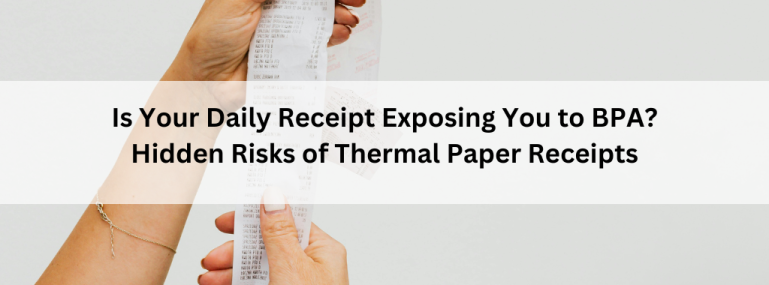
Most people associate Bisphenol A (BPA) with plastic bottles or food containers. However, one of the most common and often overlooked sources of BPA exposure comes from an unexpected place: thermal paper receipts. The small slips handed out at coffee shops, grocery stores, pharmacies, and retail counters may be delivering a daily dose of potentially harmful chemicals.
As awareness around toxins in consumer products grows, BPA-coated receipt paper is drawing increased attention – and for good reason.
Understanding BPA in Thermal Paper Receipts
Thermal paper receipts are printed using heat rather than ink. To enable this process, the paper is coated with color-developing chemicals, most commonly Bisphenol A (BPA) or its close chemical substitute Bisphenol S (BPS).
While BPA has been studied for decades, recent research shows that skin contact with BPA-coated receipts can lead to meaningful chemical absorption. This exposure becomes particularly relevant for individuals who:
- Grab a coffee or make purchases daily
- Handle receipts multiple times a day
- Work in retail, hospitality, delivery, or service industries
Because BPA is a known endocrine disruptor, even low-level, repeated exposure raises legitimate health concerns.
The Problem: A Silent Route of Exposure
When you touch a thermal receipt, BPA can transfer easily to your skin. Absorption increases significantly if you:
- Apply hand lotion or sanitizer
- Have moist or oily skin
- Eat or touch food shortly after handling receipts
Health Risks Linked to BPA Exposure
BPA can mimic estrogen in the body and has been associated with:
- Hormonal imbalance
- Reproductive health issues
- Metabolic disorders
- Thyroid disruption
- Behavioural and developmental effects in children
Lack of Transparency
Most businesses do not disclose whether their receipts are BPA-free. Even when labelled “BPA-free,” many thermal papers contain BPS, which studies suggest may pose similar endocrine-disrupting risks.
Higher Risk for Workers
Cashiers, baristas, and retail employees may handle hundreds of receipts during a single shift, placing them at significantly higher exposure levels than the average consumer.
The Solution: Going Paperless
The most effective way to reduce BPA exposure from receipts is to limit direct contact. Simple, practical changes can significantly lower risk:
- Choose digital receipts via email or SMS whenever possible
- Decline receipts if they are not needed
- Switch to BPA-free and BPS-free alternatives such as phenol-free thermal paper
- Wash hands before eating after handling receipts, especially if lotion or sanitizer was used
- Adopt “no-print unless requested” policies in workplaces to protect employees and customers
Benefits, Effects, and Impact
For Consumers
- Reduced exposure to endocrine-disrupting chemicals
- Lower risk of hormonal and reproductive health issues
- Safer daily habits, especially for pregnant women and children
For Businesses
- Improved workplace health and employee safety
- Reduced paper usage and operational costs
- Enhanced brand reputation through sustainability and health-conscious practices
For the Environment
- Less thermal paper waste
- Reduced chemical pollution
- Support for greener, digital-first retail models
Your daily coffee routine may feel harmless, but the receipt handed over at the counter could be an avoidable source of chemical exposure. BPA-coated thermal paper is a widely used yet often overlooked risk, and the evidence around its health effects continues to grow.
Going paperless is not just an environmentally friendly choice – it is a practical step toward better health. Whether you are a consumer or a business owner, choosing digital receipts is a small change that can make a meaningful difference.
The next time you are offered a printed receipt, consider saying:
“No thanks – digital is fine.”
Your hormones may thank you later.
FAQs:
1. Are BPA-free receipts safe?
Not always. Many BPA-free receipts contain BPS, which may have similar endocrine-disrupting effects.
2. Can touching receipts really cause BPA absorption?
Yes. Studies show BPA can transfer through the skin and enter the bloodstream, particularly when hands are moist or oily.
3. Who is most at risk?
Cashiers, baristas, and workers who handle large volumes of receipts daily face the highest exposure risk.
4. How can I tell if a receipt contains BPA?
Thermal paper often feels smooth and glossy, but without testing it is difficult to know. Minimizing contact is the safest approach.
5. Is going paperless mandatory?
Not yet. However, many businesses are voluntarily shifting to digital receipts for health, cost savings, and sustainability reasons.