
Is Your Daily Receipt Exposing You to BPA? Hidden Risks of Thermal Paper Receipts
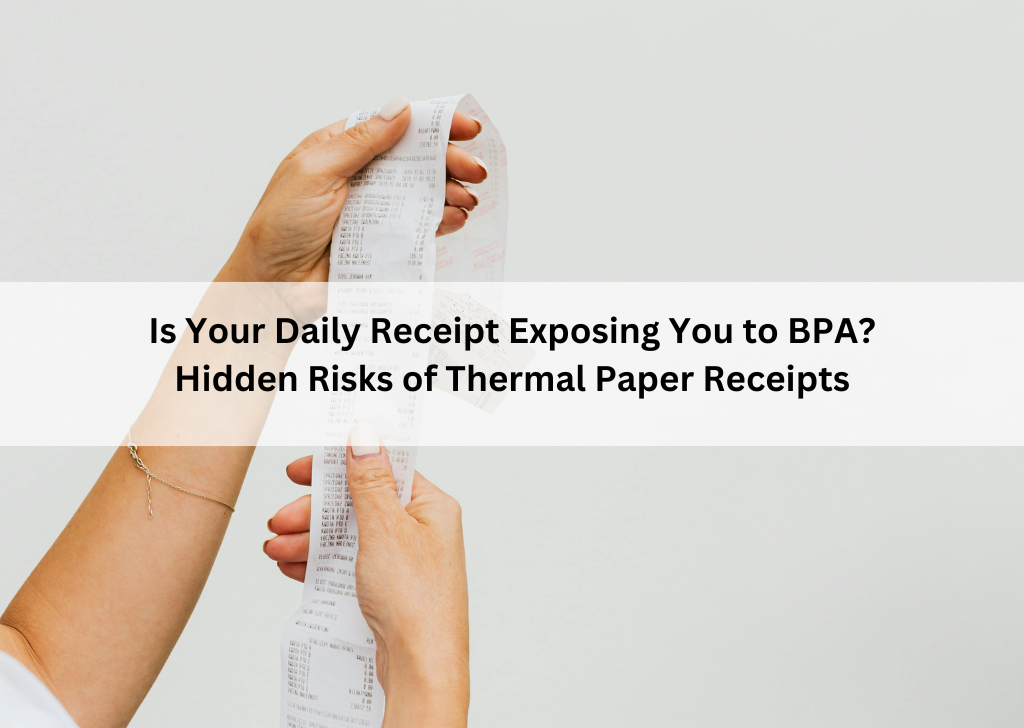
Most people associate Bisphenol A (BPA) with plastic bottles or food containers. However, one of the most common and often overlooked sources of BPA exposure comes from an unexpected place: thermal paper receipts. The small slips handed out at coffee shops, grocery stores, pharmacies, and retail counters may be delivering a daily dose of potentially harmful chemicals. As awareness around toxins in consumer products grows, BPA-coated receipt paper is drawing increased attention – and for good reason. Understanding BPA in Thermal Paper Receipts Thermal paper receipts are printed using heat rather than ink. To enable this process, the paper is coated with color-developing chemicals, most commonly Bisphenol A (BPA) or its close chemical substitute Bisphenol S (BPS). While BPA has been studied for decades, recent research shows that skin contact with BPA-coated receipts can lead to meaningful chemical absorption. This exposure becomes particularly relevant for individuals who: Because BPA is a known endocrine disruptor, even low-level, repeated exposure raises legitimate health concerns. The Problem: A Silent Route of Exposure When you touch a thermal receipt, BPA can transfer easily to your skin. Absorption increases significantly if you: Health Risks Linked to BPA Exposure BPA can mimic estrogen in the body and has been associated with: Lack of Transparency Most businesses do not disclose whether their receipts are BPA-free. Even when labelled “BPA-free,” many thermal papers contain BPS, which studies suggest may pose similar endocrine-disrupting risks. Higher Risk for Workers Cashiers, baristas, and retail employees may handle hundreds of receipts during a single shift, placing them at significantly higher exposure levels than the average consumer. The Solution: Going Paperless The most effective way to reduce BPA exposure from receipts is to limit direct contact. Simple, practical changes can significantly lower risk: Benefits, Effects, and Impact For Consumers For Businesses For the Environment Your daily coffee routine may feel harmless, but the receipt handed over at the counter could be an avoidable source of chemical exposure. BPA-coated thermal paper is a widely used yet often overlooked risk, and the evidence around its health effects continues to grow. Going paperless is not just an environmentally friendly choice – it is a practical step toward better health. Whether you are a consumer or a business owner, choosing digital receipts is a small change that can make a meaningful difference. The next time you are offered a printed receipt, consider saying: “No thanks – digital is fine.”Your hormones may thank you later. FAQs: 1. Are BPA-free receipts safe?Not always. Many BPA-free receipts contain BPS, which may have similar endocrine-disrupting effects. 2. Can touching receipts really cause BPA absorption?Yes. Studies show BPA can transfer through the skin and enter the bloodstream, particularly when hands are moist or oily. 3. Who is most at risk?Cashiers, baristas, and workers who handle large volumes of receipts daily face the highest exposure risk. 4. How can I tell if a receipt contains BPA?Thermal paper often feels smooth and glossy, but without testing it is difficult to know. Minimizing contact is the safest approach. 5. Is going paperless mandatory?Not yet. However, many businesses are voluntarily shifting to digital receipts for health, cost savings, and sustainability reasons.
BPA Restrictions Strengthened Under New FCM Regulation
The Food Contact Materials (FCM) Regulation refers to a set of rules established by the European Union to ensure the safety of materials and articles that come into contact with food. Starting January 20, 2025, Bisphenol A (BPA) and its salts will be prohibited in the manufacture of materials intended to be marketed within the EU, under the updated Commission Regulation (EU) 2024/3190. Regulation 2024/3190 aims to address the health risks associated with BPA exposure, particularly its effects on the reproductive and endocrine systems. It prohibits BPA in plastics, varnishes, coatings, adhesives, printing inks, and other materials intended for food contact. Certain applications—such as polysulfone filtration membranes and large-capacity liquid epoxy resins—are exempt under strict migration limits. Benefits / Effects / Impact Industries are given the following transition timeline to comply: These transitional provisions give businesses time to adapt while ensuring the long-term protection of consumer health. ComplianceXL provides end-to-end consulting services to help companies comply with FCM regulations and their amendments.Our robust compliance management platform enables businesses to stay updated through due diligence, supplier engagement, and comprehensive compliance documentation, as part of a proactive compliance data management strategy. FAQs: 1. What materials are affected by the BPA ban? The ban applies to various food contact materials, including plastics, varnishes and coatings, printing inks, adhesives, and more. 2. Why did the EU decide to ban BPA now? BPA exposure has been linked to immune system disruptions, reproductive issues, and hormone interference, prompting a precautionary ban to protect consumer health. 3. How can companies verify BPA levels or compliance? Companies must conduct migration testing according to EU standards and maintain documentation such as migration level reports and Declarations of Compliance (DoC).
EFSA re-evaluates BPA in food
The European Food Safety Authority (EFSA) re-evaluated Bisphenol A (BPA) in food contact materials, including the 2015 and 2018 evaluations. The purpose of these studies was to assess the possible risks associated with the consumption of food containing BPA for human health. The EFSA published a re-evaluation of BPA safety limits in April 2023, significantly reducing the tolerable daily intake (TDI) set in 2015. Bisphenol A (BPA) is a chemical used mainly in making polycarbonate plastics, which are used in electronic products like computers and cell phones. Additionally, it is used in food storage containers, water bottles, eyewear, and water supply pipes. The primary source of human exposure to BPA is food even though air, dust, and water are considered other possible sources of exposure. There are several health risks associated with BPA in foodstuff containers and in the food and drinks they contain. As a result of the updated scientific evidence, EFSA’s experts established a Tolerable Daily Intake of 0.2 nanograms per kilogram of body weight. This replaces the previous TDI level of 4 micrograms/kilogram of body weight per day. Additionally, EFSA reviews and updates its evaluations whenever new scientific evidence becomes available. The use of bisphenol A is also restricted by several EU directives and regulations. Due to its reprotoxic and endocrine-disrupting properties, bisphenol A was listed as a Substance of Very High Concern under REACH regulation. Under the Toy Safety Directive, chemicals used in chewable toys by children under 3 years old cannot migrate more than 0.04 mg/l (migration limit). Food contact regulations restrict the use of BPA in plastic containers and bottles intended for babies and children under 3 years of age. In addition to assisting companies with BPA compliance, ComplianceXL provides compliance documentation enabled with a combination of technology and a dedicated supplier engagement team. In addition, we assist customers in maintaining their supplier certificates and declarations to ensure they are up to date as part of their compliance data management plan. We monitor supplier information for accuracy and completeness. We also provide detailed reporting on compliance status to ensure that customers are always up to date on the latest regulations and requirements. Contact us today for more information! FAQs: What is the role of EFSA in human health? EFSA is an independent scientific agency responsible for providing scientific advice and communication on food safety issues within the European Union (EU). What is TDI? The TDI or Tolerable Daily Intake is an estimate of the amount of a substance that people can consume daily during their whole life without any major risk to health. TDIs are expressed on a bodyweight basis.
ECHA Postpones Submission Data for Bisphenol a Restriction Report
According to ECHA, the submission of the 4,4′-isopropylidenediphenol (bisphenol A, BPA) (EC 201-245-8,CAS 80-05-7) restriction report by Germany has been postponed until 7 October 2022. European Chemicals Agency (ECHA) is seeking comments on the substance and examples of its uses: N-(Hydroxymethyl)acrylamide (EC 213-103-2, CAS 924-42-5) used as monomer for polymerization.The chemical Bisphenol A (BPA) is used to make polycarbonate plastic. In addition to hard plastic items, such as baby bottles, re-usable water bottles, food containers, pitchers, tableware, and other storage containers, polycarbonate plastic is also used to make soft plastic items. BPA may have adverse effects on the fetus, infant, and child’s brain and prostate gland when exposed to it. Children’s behavior may also be affected by BPA exposure. In addition, additional research indicates that BPA may be related to increased blood pressure, type 2 diabetes, and heart disease. The deadline for comments on BPA restriction is 19 April 2022. Until the outcome of the Annex XV review and any restrictions proposed, ECHA keeps a registry of restriction intentions. A restriction proposal can be prepared by a Member State or by ECHA either on their own initiative or at the request of the Commission. An authorization request can be made for substances on the Authorization List. A Member State must inform ECHA of its intention to develop a restriction dossier as a matter of law. Interested parties can plan and prepare their comments in advance by reviewing the advance notice. Following the progress of a proposal through the restriction process is possible, starting with the notification of the intention, followed by the adoption of the final opinions by the Risk Assessment Committee (RAC), the Socioeconomic Analysis Committee (SEAC), and the adoption by the European Commission of the restriction. As part of the preparation and consultation of the restriction proposal, stakeholders are encouraged to submit any relevant information to the dossier submitters. It is important to receive information to motivate any exemptions to the scope described in the intention during the preparation phase of the dossier. Companies are responsible for making sure they are aware of the composition of the products they sell. Using ComplianceXL’s Managed Compliance Solution, you’ll enhance data collection and streamline reporting for chemical substances using regularly updated restricted substances lists.